
See also


 13.11.2026 04:26 AM
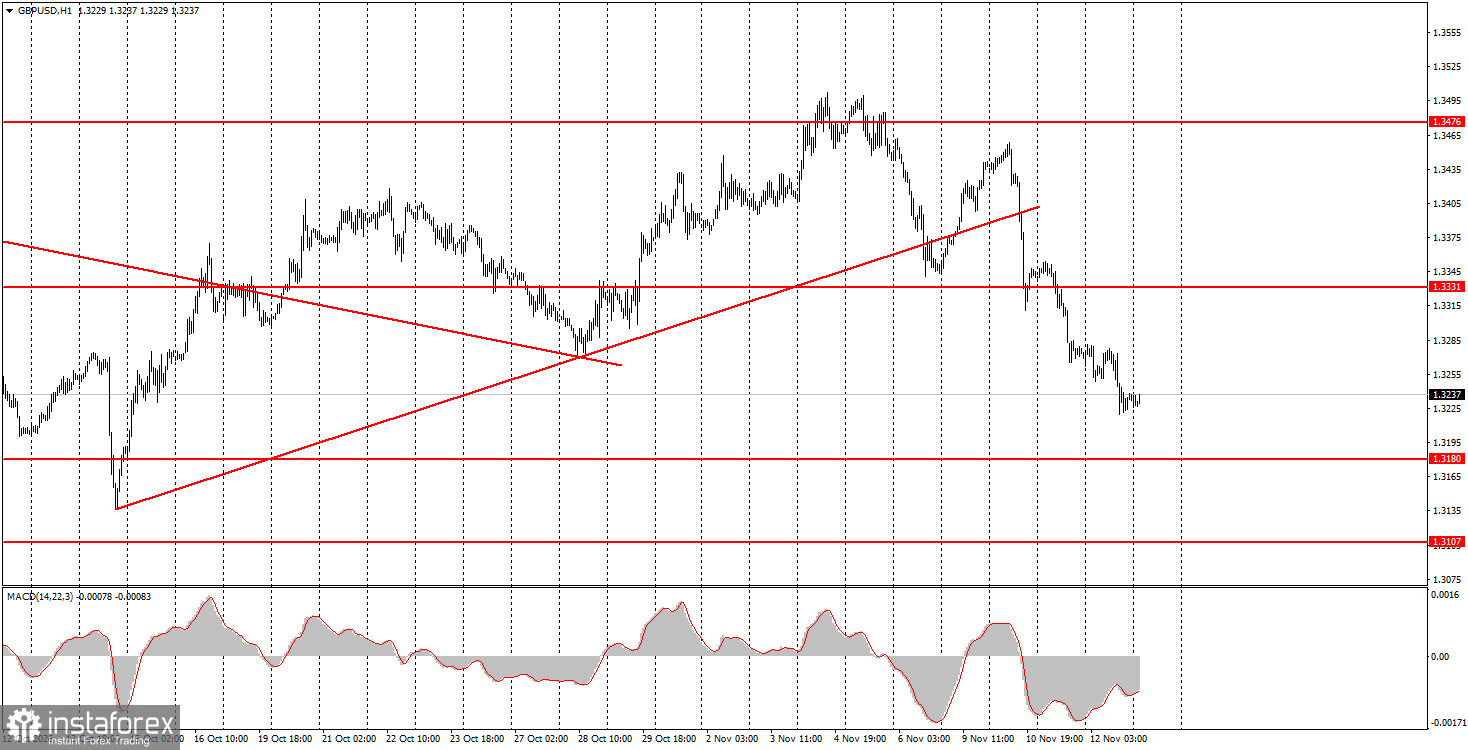
The GBP/USD pair continued downward on Friday, driven by fundamentals that differ somewhat from EUR/USD. Sterling had risen fairly well in recent weeks but has already given back much of those gains. Drivers of GBP/USD's decline were US labor, unemployment, and inflation reports — all three printed readings that reinforced hawkish Federal Reserve expectations. Although the December Fed move (0.25%) remains the base case, the market is looking into 2027, and each inflation print above forecasts raises the odds of a longer and stronger tightening cycle. Unfortunately, as with the euro and the European Central Bank, the market largely discounts the fact that the Bank of England is also tightening and UK inflation is rising. Thus, declines into the 1.3150–1.3180 area can be rationalized, but any substantially deeper drop would be viewed as illogical.
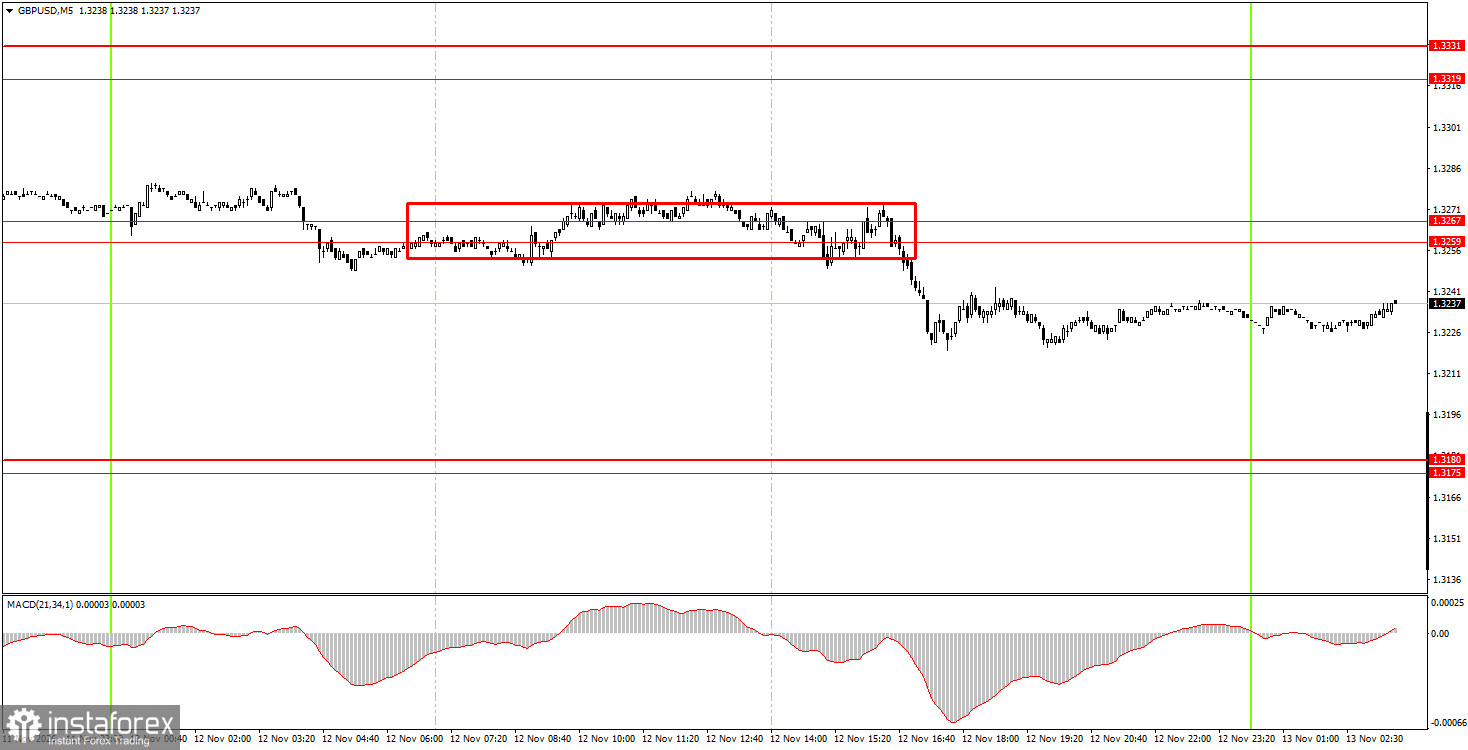
On the 5-minute timeframe, one sell signal formed on Thursday. Price spent about 12 hours trying to detach from the 1.3259–1.3267 zone and managed to do so during the US session, giving novice traders a simple short entry. The decline may continue today, especially if the PPI prints stronger than current forecasts. Traders could have taken profits of about 15–20 pips on shorts yesterday evening.
On the hourly timeframe, GBP/USD has completed the formation of a corrective down move, while the overall bias remains bullish. Sterling generally trades more logically than the euro and therefore has a good chance to resume its uptrend after the correction ends. The technical picture on most timeframes supports a continuation of the pair's broader advance. Sideways channels on daily and weekly charts do not imply a major structural collapse.
On Friday, novice traders may consider new short positions targeting 1.3175–1.3180 if price bounces off the 1.3259–1.3267 area. Open long positions targeting 1.3319–1.3331 if price closes and holds above 1.3259–1.3267.
On the 5-minute timeframe you can trade the levels 1.3043, 1.3096–1.3107, 1.3175–1.3180, 1.3259–1.3267, 1.3319–1.3331, 1.3380–1.3386, 1.3456–1.3476, 1.3587–1.3598, 1.3631–1.3641. No major UK releases are scheduled for Friday; in the US, the Producer Price Index (PPI) will be released — an important print in the current environment. The market may continue buying the dollar if PPI surprises to the upside.
Price levels (areas) of support and resistance — levels that serve as targets when opening longs or shorts or as sources of signals.
Red lines — channels or trendlines that display the current trend and indicate the preferred trading direction.
MACD indicator (14,22,3) — histogram and signal line — an auxiliary indicator that can also be used as a source of signals.
Important speeches and reports (listed in the news calendar) can strongly affect a currency pair's movement. Therefore, when they are released, one should trade as cautiously as possible or step aside to avoid a sudden price reversal against the prior direction.
Beginner forex traders should remember that not every trade can be profitable. Developing a clear strategy and money-management rules is the key to long-term success in trading.


